



BRICK IMPREGNATION – Wall Brick Protector

- Reducing capillary water uptake in brick façades and garden walls
- Helping prevent damp patches, surface erosion and spalling
- Reducing salt/nitre efflorescence and staining
- Lowering the risk of freeze–thaw damage in brickwork and joints

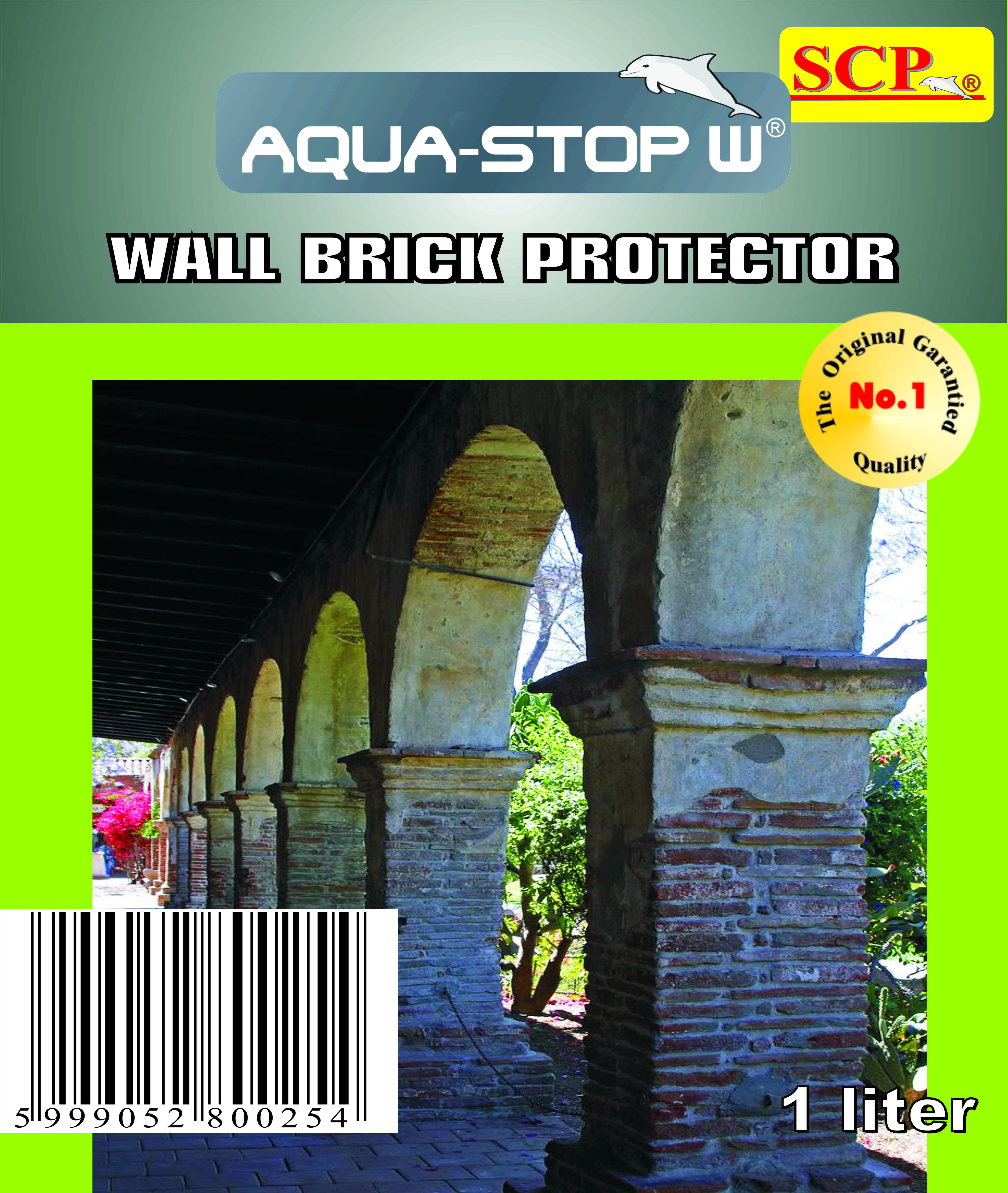
BRICK IMPREGNATION – Wall Brick Protector is an impregnating treatment developed specifically to reduce the capillary water uptake of brick surfaces – for both new and reclaimed bricks.
Brick treated with the product does not absorb water, which helps reduce surface decay, nitre / salt efflorescence, and lowers the risk of frost damage.
If bricks are installed in mortar or another bonding material, treat the surface only after the binder has fully cured and dried. If bricks are laid in sand (walking surface), it is recommended to impregnate them by dipping before installation.

The brick surface to be treated must be . Remove loose and crumbling parts, deteriorated joints, and any old, peeling coatings. If necessary, clean the surface and allow it to dry completely.
If the bricks are installed in mortar or another binder, treatment must be carried out , including the joints.
If the bricks are laid in sand (walking surface), the bricks in the product for approx. before installation, then let the excess drain and install.
Apply by or so that the material runs on the surface (). Usually are required. Always apply the second coat (wet-on-wet).
The surface must not be overheated. Recommended application temperature: . Do not apply to frosty or strongly cooled substrates, or to surfaces overheated by direct sunlight.
Always carry out a to confirm consumption and performance. The special formulation makes it possible to the surface later at any time, if needed.
Material consumption depends mainly on brick type, porosity and surface roughness. The guideline values below refer to typical two-coat applications:
| Surface type | Recommended coats | Coverage / consumption |
|---|---|---|
| New brick surface (average porosity) | 2 coats | 2–3 m²/L (approx. 0.33–0.50 L/m²) |
| Very porous reclaimed brick surface | 2 coats | approx. 0.7–1.0 L/m² |
Typical practical average consumption is approx. 0.7 L/m². Always determine the exact value with a test area.