

WINNING THE WAR AGAINST WATER AND MOULD
Learn how silicone-based water repellents reduce damp-related damage on façades and masonry without creating a surface film.
- Water uptake during wind-driven rain on façades.
- Salt efflorescence and recurring damp patches on masonry.
- Mould risk caused by persistently damp mineral surfaces.
- Moisture-driven deterioration of render, brick and natural stone.

Water is one of nature’s strongest destroyers – and the most versatile solvent on Earth. Ever since humans started building, moisture has been a primary enemy of façades, masonry and renders.
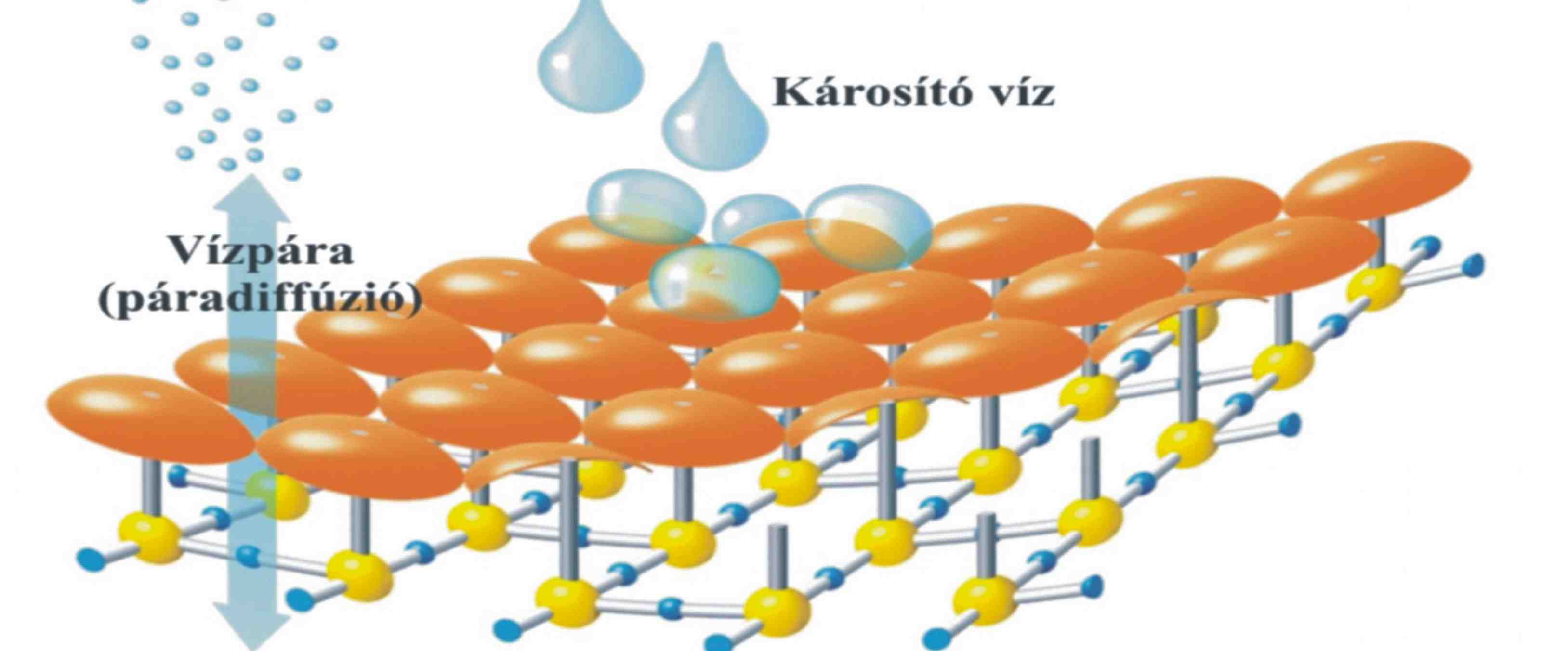
The root cause is porosity. The more porous a material is, the more water it can absorb. The goal is to reduce liquid water uptake while preserving vapour permeability (“breathability”).
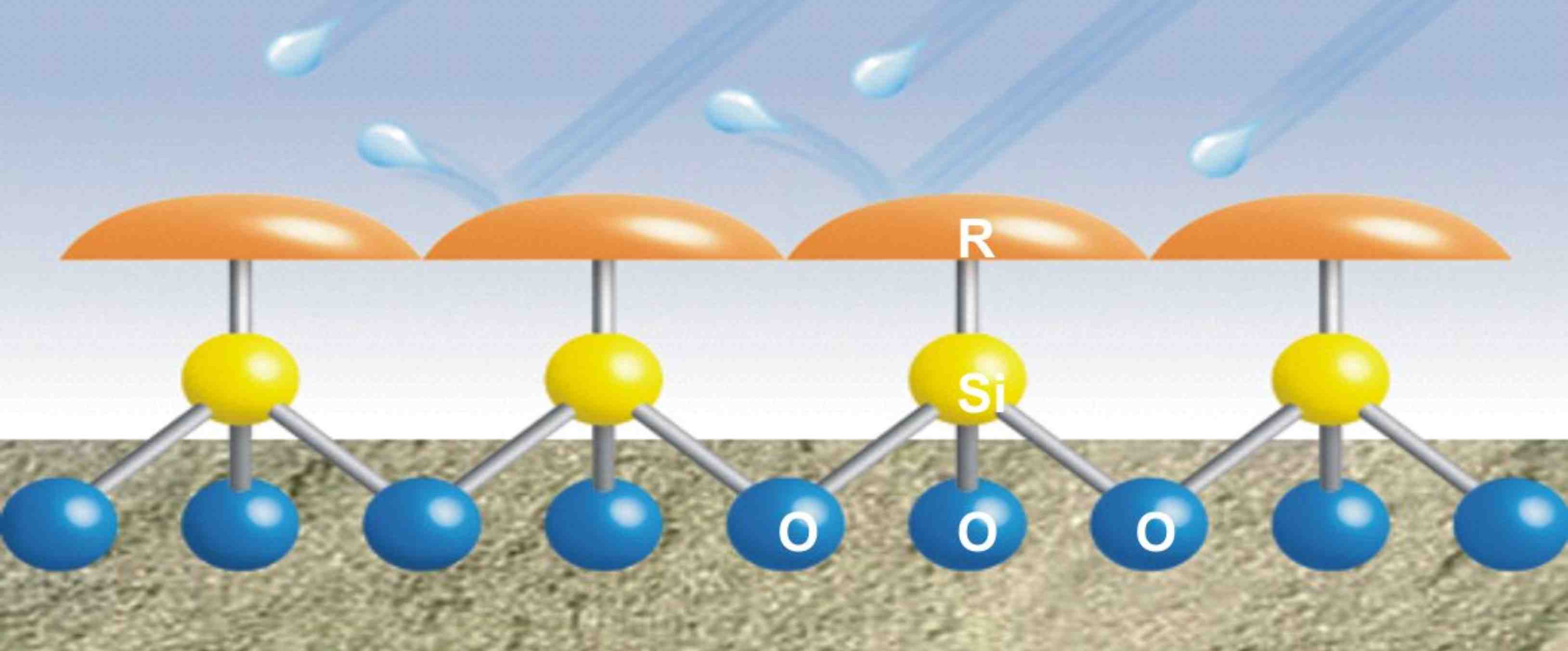
Hydrophobisation creates a hydrophobic zone inside the pore structure. This dramatically reduces capillary water absorption. The structure stays drier, so damp-related deterioration is much less likely.
Organosilicon compounds (silicones) bond to mineral substrates and form an extremely thin layer on pore walls. Liquid water uptake decreases sharply, while vapour diffusion remains – unlike film-forming coatings such as acrylic, polyurethane or epoxy paints.
For a deeper explanation, see: How silicone works (FAQ).
Important: because pores remain open, hydrophobisation is not intended for areas under constant water pressure. It is not suitable for waterproofing basements or swimming pools.
- Construction defects (roof issues, faulty gutters, cracks, defective rainwater drainage).
- Wind-driven rain (cannot be eliminated, but its impact can be reduced).
- Rising moisture from the ground (requires correct technology and investigation).
Before any renovation, defects should be identified and corrected. Silicone-based building protection materials have been used successfully for many years as part of moisture-management solutions.
For façades exposed to wind-driven rain, silicone water repellents are commonly applied without pressure (for example with a garden sprayer) using a flooding/saturation method. Apply wet-on-wet until the surface can no longer absorb the liquid.
Depending on absorbency and application amount, the treatment can penetrate several millimetres (and in some cases centimetres). After the carrier evaporates (water or organic solvent), a water-repellent layer remains on pore walls.
For practical guidance, see: How to carry out hydrophobisation (FAQ).
- During plaster renovation: a water-repellent additive can be mixed into the water used for the top render layer.
- For lime paint coatings: limewash can be made more water-repellent by additives or post-treatment impregnation.
- For silicate paints: organosilicate systems may use silicone resin emulsions or post-treatment primers for water repellency.
To explore solutions and cleaners that support most silicate-based surfaces, visit our product portfolio.